
Every year as the moon waxes and wanes, millions of people around the world prepare for one of the most joyous celebrations on Earth — the holiday many of us know as Chinese New Year. But if you’ve ever seen it called Lunar New Year too, you might wonder why the two names are used almost interchangeably. As people who create animated ecards to help people spread love and good wishes during this festive season, we’re excited to take you behind the scenes of this tradition and share why both names matter.
At its heart, Chinese New Year is called Lunar New Year because the date of the celebration isn’t based on the regular solar calendar (January 1), but on the phases of the moon. The new year begins on the second new moon after the winter solstice, typically between late January and mid-February, marking the start of a new cycle in the lunisolar calendar. This lunar connection is the origin of the “Lunar New Year” name.
Originally rooted in ancient Chinese agrarian society, this festival goes back thousands of years — with elements of its practice recorded as far back as the Shang Dynasty and codified during the Han Dynasty. The holiday is woven together with stories like that of Nian, a fearsome mythical beast said to terrorize villages at the onset of each year. Villagers discovered that loud noises, bright lights, and the color red — things that now define many of the festival’s traditions — helped chase Nian away. Over time, this legend became part of the lore of ushering out the old year and welcoming prosperity and good luck in the new one.
Today, the festival isn’t just celebrated in China — though there it’s often called Spring Festival — but across many Asian societies and in diaspora communities worldwide. From Taiwan and Singapore to Malaysia, Vietnam, and Korea (where the holiday is known as Tet or Seollal), the themes of family reunion, feasting, and honoring ancestors are shared, even as each culture brings its own unique customs to the celebration. Parades, lion and dragon dances, fireworks, and special foods like dumplings and rice cakes all play a role in welcoming good fortune for the year ahead.
As folks who design Chinese New Year ecards and Lunar New Year ecards, the magic of this holiday isn’t just in the lanterns and lion dances — it’s in the connections we make. On our holiday page, you’ll find a joyful collection of animated greetings you can send to loved ones near and far. Whether you’re looking for playful animations that dance with vibrant reds and golds, or heartfelt Chinese New Year greetings that express sincere wishes for health, wealth, and happiness, our Lunar New Year greetings are crafted to brighten someone’s day. These ecards capture many of the traditional symbols associated with the holiday — from zodiac animals to spring blossoms — giving you a meaningful way to celebrate.
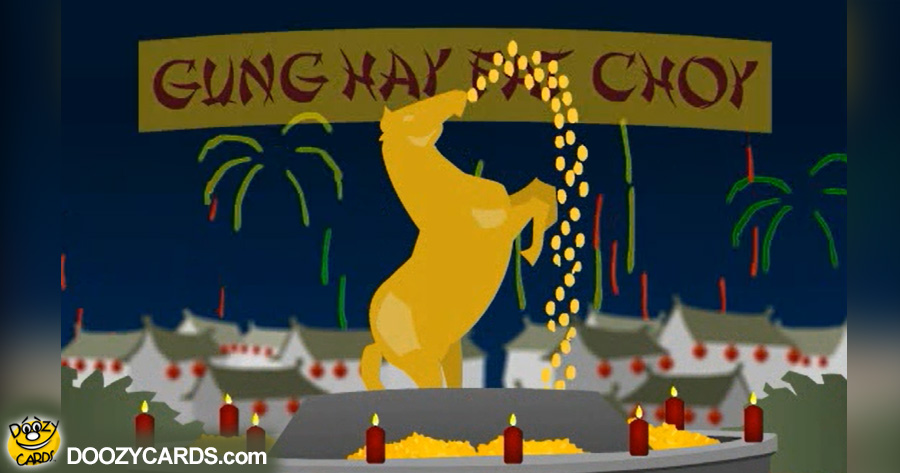
We love how sending a simple piece of digital art can become a modern twist on an age-old tradition. In a season that’s all about renewing bonds and sharing blessings, there’s nothing quite like receiving a beautiful Year of the Horse ecard – it’s the Year of the Horse this year – to remind someone they’re in your thoughts. Whether you call it Chinese New Year or Lunar New Year, both names reflect different facets of a festival that’s rich in history, culture, and heartfelt emotion. Let’s celebrate the new beginnings together!